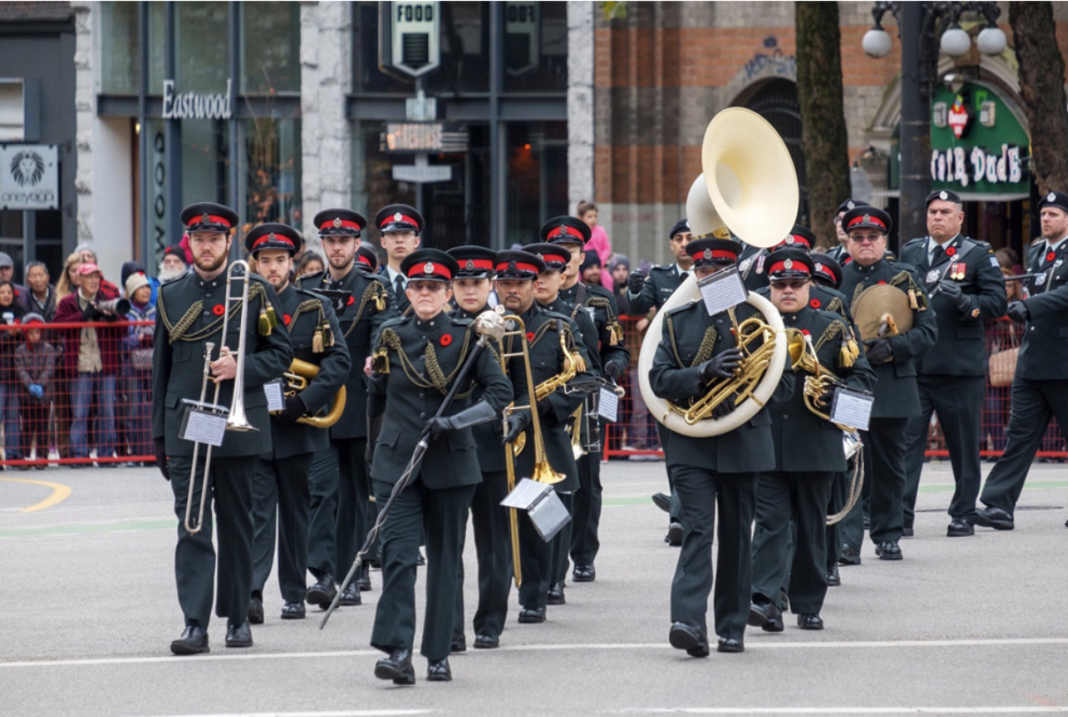

The British Columbia Regiment, commonly known as the Duke of Connaught’s Own (DCOR), is an armoured reconnaissance military unit of the Canadian Army’s Primary Reserve. It is subordinate to 39 Canadian Brigade Group of 3rd Canadian Division. The Regiment was established in 1883, making it the oldest military unit in Vancouver. It is famous for holding parades at the Beatty Street Drill Hall, located at the corner of Dunsmuir and Beatty streets in downtown Vancouver. Read more at vancouveryes.
The Regiment’s Role in the Steveston Riot
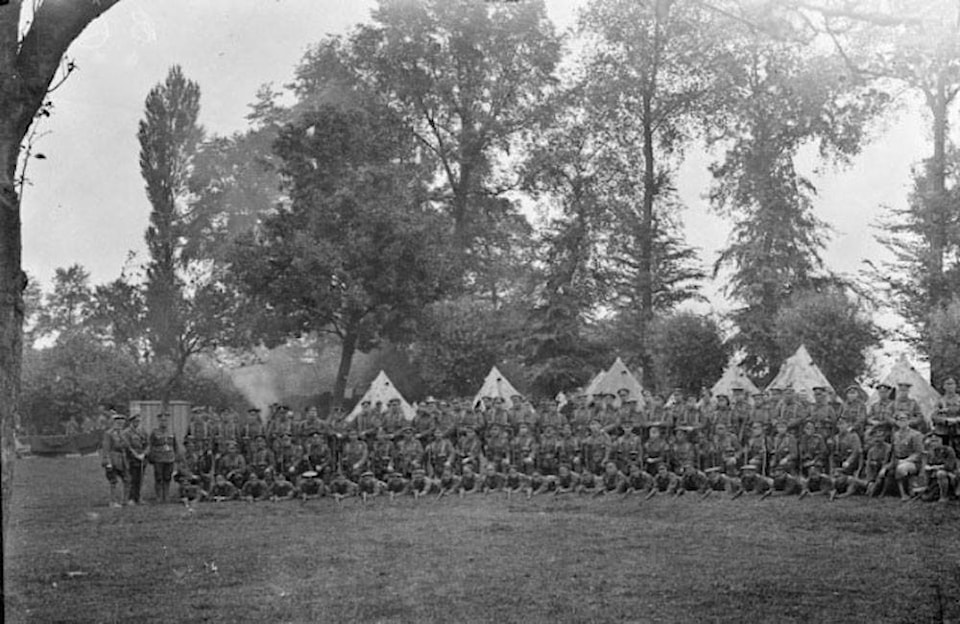
The Steveston Riot in July 1900 presented the Regiment with a huge call to action in support of civil authority. At the time, Steveston was arguably the world’s largest salmon fishing centre. European and Indigenous fishermen were on strike, while Japanese fishermen chose to continue selling fish to the cannery. Though no violence had occurred, the District Sheriff, along with two magistrates, read the Riot Act to the strikers. When they refused to disperse, he requested military assistance. At 11:45 p.m., Colonel Warsnop was ordered to mobilize troops to suppress the disturbance. Since only one in five homes had a telephone at the time, buglers rode through Vancouver calling people to mobilization. Soon, four companies rallied and boarded the C.P.R. steamer Comox bound for Steveston. Each soldier was issued ten rounds of ammunition, with twenty more kept in reserve. They were also told that, if necessary, they would need to shoot to kill. Fortunately, the strikers learned that the military was approaching, so the Regiment disembarked into a quiet town, where they set up camp nearby and enjoyed the good weather for several weeks until the situation subsided.
Meanwhile, construction continued on the new drill hall at 620 Beatty Street, featuring brick and stone castle towers. It remains the Regiment’s home to this day, though it was officially opened by the Duke of Cornwall and York on September 30, 1901. Fun fact: Two commemorative chairs specially made for the Duke and Duchess are preserved in the Regiment’s museum.
Duke of Connaught’s Soldiers: Masters of the Marksmanship
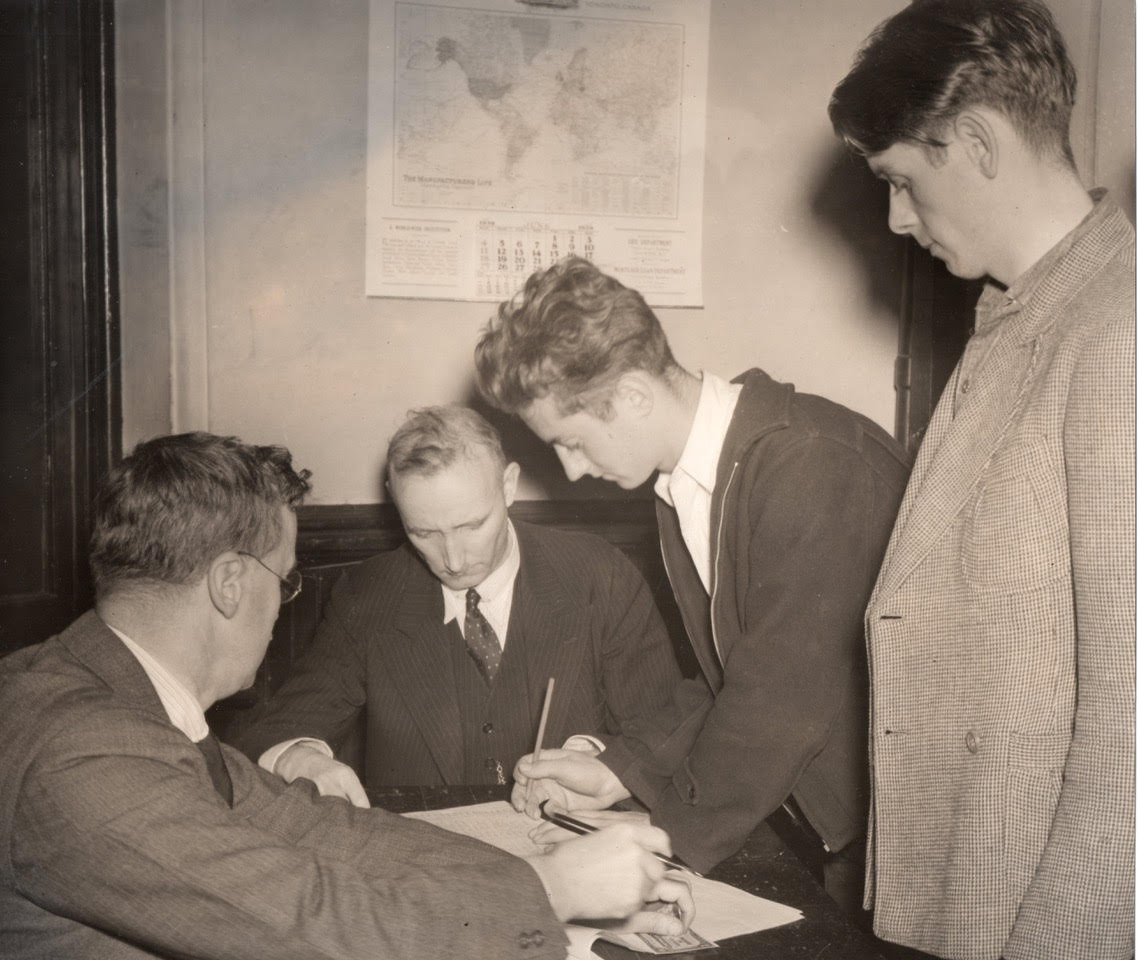
In 1904, one of DCOR’s soldiers, Sam Perry, became the best shot in the entire British Empire. He won the King’s Prize at the Bisley competition, becoming the first Canadian to achieve this recognition. At 600 yards, he scored 18 bullseyes, and at 1,000 yards, he hit the target forty-eight out of fifty times. This success marked the beginning of an exciting history of achievement in marksmanship for the Regiment. As a result, the Regiment won the Gordon Highlanders Musketry Trophy, and Captains W. G. Forrest and J. Duff Stuart were part of the Canadian team that won the Kolapore Cup. Overall, the Regiment’s regional rifle teams won numerous trophies and cups over the years.
In 1907, permission was granted to organize a Maxim Gun School. Lieutenant J. S. Matthews, who later became the City Archivist, was appointed to lead this training institution. Notably, this was the first school of its kind in British Columbia. Students from the Maxim Gun School went on to form the Machine Gun Section of the 7th (1st British Columbia) Battalion of the Canadian Expeditionary Force in 1914.
The Paardeberg Battle Reenactment
Another intriguing incident occurred at the Drill Hall on March 16, 1908, when a gala event was held to recreate the **Battle of Paardeberg**. The “British” troops were formed by veterans of the South African War, and the “Boers” were played by other soldiers from the Regiment. Stands were even built inside the hall for the guests. Through one door entered the “Boers,” dragging wagons which they quickly formed into a camp. Then the “British” burst in to seize the enemy positions. Rifle shots thundered, and the cries of the wounded were incredibly realistic. Even the doctors of the 18th Field Ambulance Unit, who participated in the demonstration, noted that there was actual blood. One man had indeed been wounded in the shoulder. Military medic McTavish and his assistants tended to the “fake” casualties. It later turned out that a young participant from the “Boer” team had found extra ammunition and secretly distributed it. He had accidentally obtained and used live rounds during the mock battle. Fortunately, no one was killed, so an official inquiry was avoided. Major Hart-McHarg, who organized the event, must have breathed a sigh of relief. The local press present at the gala wisely remained silent about the incident.
Involvement in the Coal Miners’ Riot
In 1913, another call to arms came to assist the civil authority. The Nanaimo coal miners’ strike became the longest active deployment in the Regiment’s history. When coal miners of Chinese and Japanese descent were brought in to work the Nanaimo mines, one thousand strikers started a riot. They seized the city, looting, burning, fighting, and destroying property. Many innocent families, including women and children, fled into the woods for safety.
Premier Sir Richard McBride was absent, but Attorney General and acting Premier W. J. Bowser quickly called in the militia. On the evening of May 13, 1913, one thousand soldiers, including the 6th DCOR, departed for Nanaimo. The strike was put on hold. Most of the military returned home after a month, but a small garrison remained in Nanaimo for some time longer.